




In the world of finance and business analysis, few metrics are as important and widely discussed as Free Cash Flow (FCF). Whether you are an investor evaluating a company, a business owner planning expansion, or a finance student learning corporate fundamentals, understanding free cash flow can give you deep insights into a company’s financial health.
In this detailed guide, we will explore what free cash flow is, how it is calculated, why it matters, and how it differs from other financial metrics like net income.
What Is Free Cash Flow?
Free Cash Flow (FCF) represents the cash a company generates after accounting for capital expenditures required to maintain or expand its asset base. In simple terms, it is the money left over after a business pays for operating expenses and investments in equipment, buildings, or technology.
Unlike accounting profits, free cash flow focuses on actual cash movement. This makes it one of the most reliable indicators of financial strength.
The Basic Formula of Free Cash Flow
The most common formula for calculating free cash flow is:
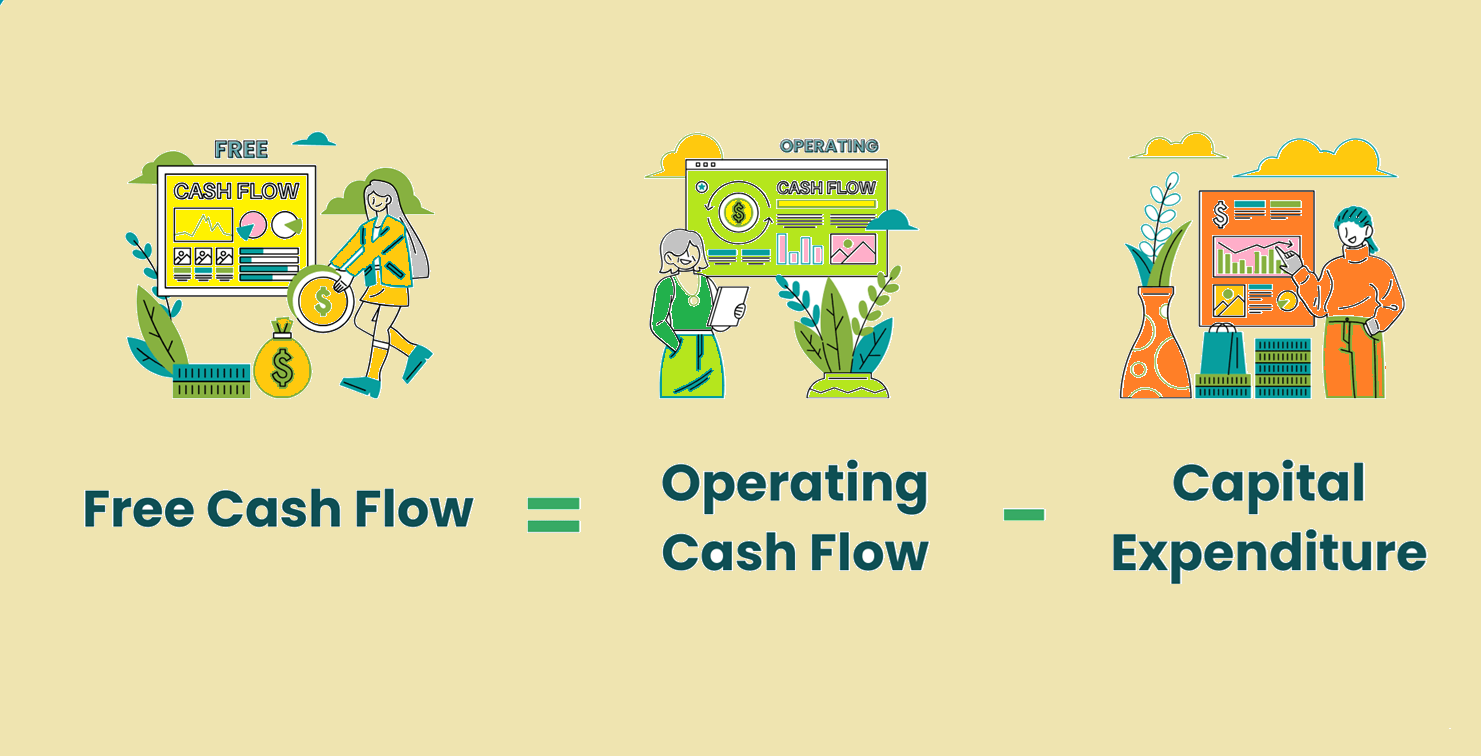
Free Cash Flow = Operating Cash Flow – Capital Expenditures
Let’s break this down:
-
Operating Cash Flow (OCF): Cash generated from core business operations.
-
Capital Expenditures (CapEx): Money spent on acquiring or upgrading physical assets such as property, plant, and equipment.
If a company generates ₹10 crore in operating cash flow and spends ₹3 crore on capital expenditures, its free cash flow would be ₹7 crore.
Why Free Cash Flow Is Important
1. Indicates Financial Strength
A company with strong and consistent free cash flow has the ability to reinvest in its business, reduce debt, pay dividends, or buy back shares. Companies like Apple Inc. and Microsoft Corporation are often highlighted for their strong free cash flow generation, which supports innovation and shareholder returns.
2. Supports Business Growth
Free cash flow allows companies to:
-
Expand operations
-
Launch new products
-
Enter new markets
-
Invest in research and development
For example, companies such as Amazon.com, Inc. frequently reinvest free cash flow to strengthen logistics, technology, and global presence.
3. Helps in Debt Reduction
Businesses with healthy free cash flow can reduce financial risk by paying off loans and lowering interest costs. This improves their credit profile and long-term sustainability.
4. Attracts Investors
Investors often prefer companies that generate positive and growing free cash flow because it suggests strong operational efficiency and financial discipline.
Free Cash Flow vs Net Income
Many beginners confuse free cash flow with net income, but they are very different.
Net Income
Net income is the profit shown on the income statement after deducting all expenses, including taxes and interest. However, it includes non-cash items such as depreciation and amortization.
Free Cash Flow
Free cash flow focuses purely on actual cash movement. It removes accounting adjustments and shows how much cash is truly available.
A company can show high net income but have weak free cash flow if customers delay payments or if capital expenditures are very high.
Types of Free Cash Flow
1. Free Cash Flow to Firm (FCFF)
This represents cash available to all investors, including debt holders and shareholders. It is commonly used in company valuation models.
2. Free Cash Flow to Equity (FCFE)
This is the cash available only to equity shareholders after paying debt obligations.
Investors use these variations when performing discounted cash flow (DCF) analysis to determine the intrinsic value of a company.
How Investors Use Free Cash Flow
Free cash flow plays a crucial role in investment decisions. Here’s how:
1. Valuation Using Discounted Cash Flow (DCF)
In DCF analysis, projected free cash flows are discounted back to their present value. This method helps estimate what a company is truly worth.
2. Free Cash Flow Yield
Free Cash Flow Yield = Free Cash Flow / Market Capitalization
A higher yield may indicate that a stock is undervalued relative to the cash it generates.
3. Dividend Sustainability
Companies that consistently generate strong free cash flow are more likely to maintain or increase dividends over time.
Limitations of Free Cash Flow
While free cash flow is powerful, it is not perfect.
1. Fluctuations Due to Capital Expenditure
Large investments in infrastructure or expansion may temporarily reduce free cash flow. This does not necessarily mean the company is weak.
2. Industry Differences
Capital-intensive industries such as manufacturing or telecommunications may naturally have lower free cash flow compared to software companies.
3. Short-Term Distortions
Seasonal businesses or one-time expenses can temporarily impact cash flow figures.
Real-World Perspective
Many successful global companies prioritize strong free cash flow management. For instance, Alphabet Inc. uses its significant free cash flow to invest in artificial intelligence, cloud computing, and innovative ventures.
Similarly, stable consumer brands like Procter & Gamble rely on predictable cash flows to reward shareholders and expand global operations.
These examples highlight how free cash flow supports both innovation and stability.
How Businesses Can Improve Free Cash Flow
Business owners can enhance free cash flow by:
-
Improving inventory management
-
Reducing unnecessary expenses
-
Accelerating receivables collection
-
Negotiating better supplier terms
-
Controlling capital expenditure
Effective cash flow management ensures long-term growth without excessive borrowing.
Conclusion
Free cash flow is one of the most important financial metrics for evaluating a company’s true performance. Unlike net income, it shows the actual cash available after necessary investments. It helps investors assess financial strength, growth potential, and long-term sustainability.
Whether you are analyzing multinational corporations like Apple and Microsoft or managing your own small business, understanding free cash flow can help you make smarter financial decisions.
In today’s competitive business environment, cash is more than just liquidity—it is the foundation of stability, growth, and long-term success.