


Operating Cash Flow (OCF) is one of the most important financial metrics used to evaluate a company’s true financial strength. While profit figures often attract the most attention, they do not always tell the complete story. A business may show high profits on paper but still struggle to pay its bills. This is where operating cash flow becomes essential.
Table of Contents
ToggleWhat is Operating Cash Flow?
Operating Cash Flow refers to the amount of cash a company generates from its regular business operations. It shows how much money is coming in from core activities such as selling goods or providing services, after paying operating expenses like salaries, rent, utilities, and raw materials.
Unlike net income, which includes non-cash items such as depreciation and amortization, operating cash flow focuses purely on actual cash transactions. It answers a simple but critical question:
Is the company generating enough cash from its main business activities to sustain itself?
Why Operating Cash Flow is Important
Operating cash flow plays a vital role in understanding a company’s financial health for several reasons:
1. Measures Core Business Strength
OCF reflects how efficiently a company’s main operations are performing. A business that consistently generates positive operating cash flow is generally stable and self-sufficient.
2. Indicates Liquidity
Liquidity refers to the ability to meet short-term obligations. If operating cash flow is strong, the company can pay suppliers, employees, and lenders without relying heavily on external borrowing.
3. Helps in Investment Decisions
Investors often examine operating cash flow before making decisions. Companies like Apple Inc. and Reliance Industries are known for maintaining strong cash flows, which supports expansion, innovation, and shareholder returns.
4. Supports Debt Repayment
Banks and lenders closely evaluate operating cash flow to determine whether a company can repay loans comfortably.
How to Calculate Operating Cash Flow
Operating cash flow can be calculated using two primary methods:
1. Direct Method
This method lists all major operating cash receipts and payments, including:
-
Cash received from customers
-
Cash paid to suppliers
-
Cash paid for wages
-
Cash paid for operating expenses
Although straightforward, many companies do not use this method because it requires detailed cash transaction data.
2. Indirect Method (More Common)
Most companies use the indirect method, which starts with net income and adjusts for:
-
Non-cash expenses (like depreciation)
-
Changes in working capital (inventory, receivables, payables)
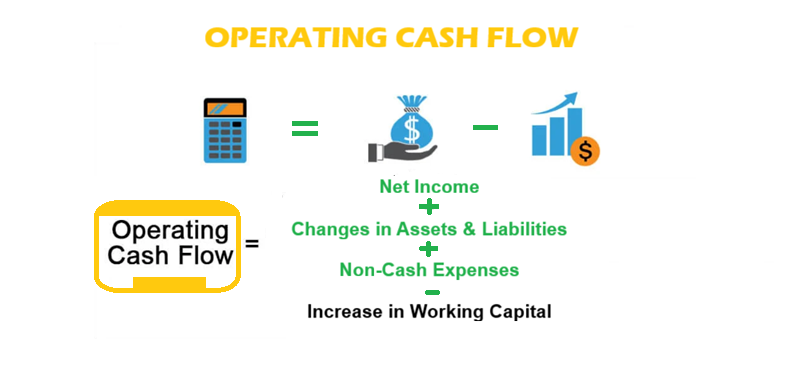
Formula (Indirect Method):
Operating Cash Flow = Net Income
-
Non-Cash Expenses
-
Decrease in Working Capital (or – Increase in Working Capital)
This approach connects profitability with actual cash movement.
Operating Cash Flow vs Net Income
Many people assume that high net income automatically means strong financial health. However, this is not always true.
For example:
-
A company may record high sales but not receive payment immediately.
-
Revenue may be shown as profit, but the actual cash has not yet arrived.
Operating cash flow removes these accounting adjustments and focuses only on real cash movement. If a company shows rising profits but declining operating cash flow, it could indicate potential financial stress.
Operating Cash Flow vs Free Cash Flow
Operating cash flow should not be confused with Free Cash Flow (FCF).
-
Operating Cash Flow measures cash generated from core operations.
-
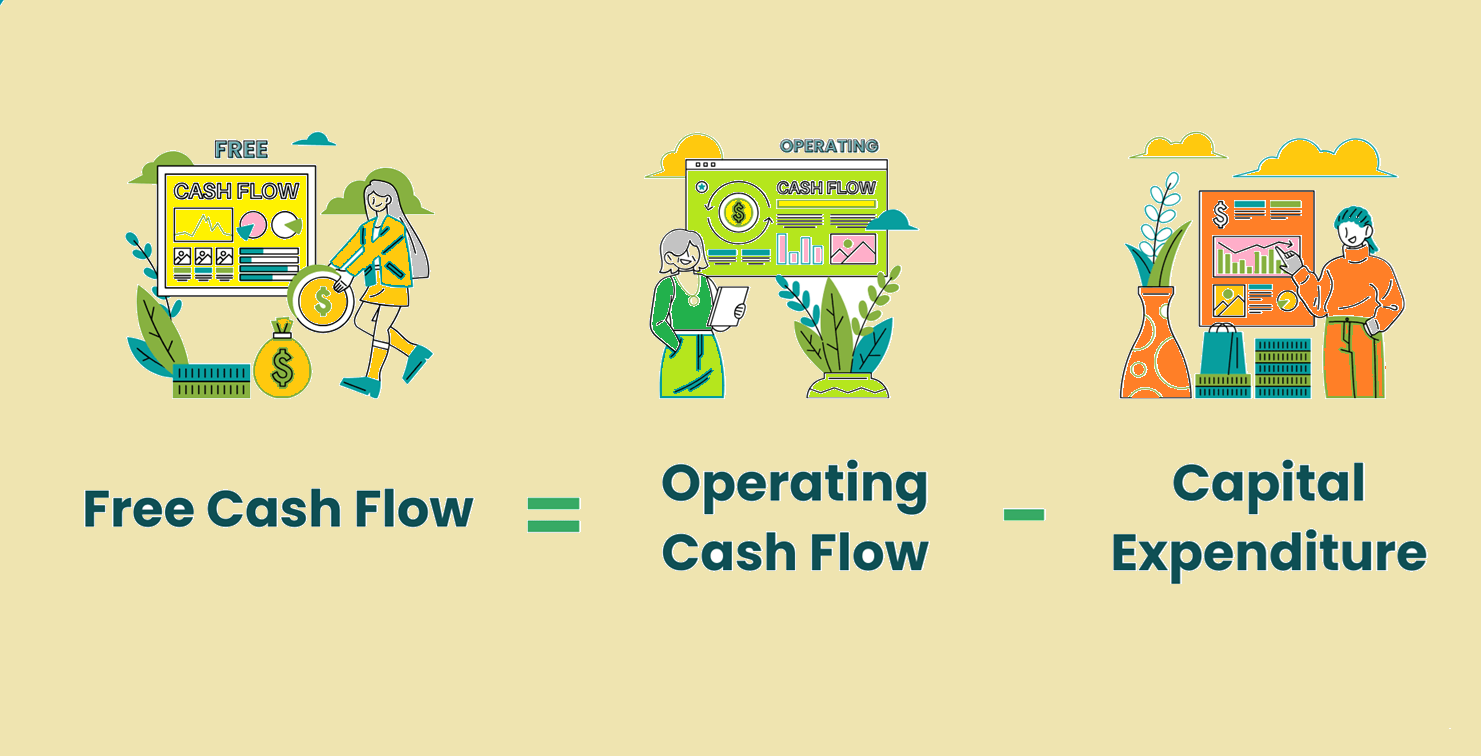
Free Cash Flow is the cash remaining after capital expenditures (such as buying equipment or expanding facilities).
Free Cash Flow = Operating Cash Flow – Capital Expenditures
Both metrics are useful, but OCF gives a clearer picture of day-to-day business performance.
Example of Operating Cash Flow
Suppose a company reports:
-
Net Income: ₹10 lakh
-
Depreciation: ₹2 lakh
-
Increase in Accounts Receivable: ₹1 lakh
-
Increase in Accounts Payable: ₹50,000
Using the indirect method:
OCF = 10,00,000
-
2,00,000
– 1,00,000 -
50,000
Operating Cash Flow = ₹11,50,000
This means the business generated ₹11.5 lakh in cash from its operations, which is stronger than its net income.
Positive vs Negative Operating Cash Flow
Positive Operating Cash Flow
-
Indicates healthy operations
-
Suggests the business can reinvest and grow
-
Reduces dependency on loans
Negative Operating Cash Flow
-
May indicate operational inefficiency
-
Could suggest declining sales
-
Might lead to borrowing or selling assets
However, negative OCF is not always bad. Startups and rapidly growing companies sometimes experience temporary negative cash flow due to heavy investment in growth.
How Investors Use Operating Cash Flow
Professional investors and analysts carefully study operating cash flow trends over multiple years. They look for:
-
Consistent growth
-
Stability during economic downturns
-
Strong OCF compared to competitors
Companies with strong operating cash flow often perform better in uncertain economic conditions because they rely less on debt.
Limitations of Operating Cash Flow
Although operating cash flow is powerful, it has limitations:
-
It does not include long-term investment expenses.
-
It may fluctuate due to seasonal changes.
-
It does not always reflect future growth potential.
Therefore, OCF should be analyzed along with other financial statements such as the balance sheet and income statement.
Conclusion
Operating Cash Flow is one of the most reliable indicators of a company’s financial health. It focuses on real cash generated from core business operations rather than accounting profits. A company with strong operating cash flow can pay its bills, invest in growth, reduce debt, and reward shareholders.
Whether you are an investor, business owner, or finance student, understanding operating cash flow can help you make smarter financial decisions. It goes beyond profit numbers and reveals the true earning power of a business.
In today’s competitive business environment, companies that consistently generate positive operating cash flow are more likely to survive economic challenges and achieve long-term success.