


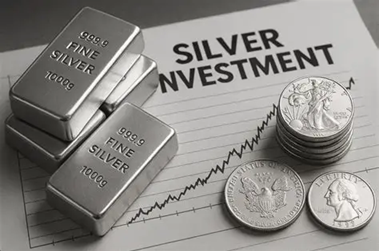
Future of Silver has been prized for thousands of years — from ancient jewelry and coins to modern industrial uses and investment portfolios. But as we look ahead, how might silver’s future unfold? The key factors shaping silver’s prospects, including supply and demand dynamics, industrial trends, investment demand, macroeconomic influences, and expert forecasts. By the end, you’ll have a clearer, data-informed picture of where silver might be headed.
1. Silver’s Dual Identity: Precious Metal and Industrial Commodity
Unlike gold, which is almost exclusively valued as a store of wealth, silver has a dual role:
-
Precious metal: Investors buy silver for wealth preservation during economic uncertainty.
-
Industrial metal: Silver is crucial in electronics, solar panels, medical devices, and more.
This dual nature means silver’s price can be influenced by both economic sentiment and real economic activity — and that’s key to understanding its future trajectory.
2. Demand Drivers: What’s Fueling Silver Use?
Industrial Demand
Silver’s superior electrical and thermal conductivity makes it indispensable in modern technology:
-
Solar energy: Solar photovoltaic (PV) cells use silver paste; growth in renewable energy increases silver consumption.
-
Electronics: Smartphones, 5G infrastructure, and automotive sensors embed silver in circuits.
-
Medical uses: Silver’s antimicrobial properties drive demand in medical equipment.
According to industry data, industrial demand accounts for more than 50% of total silver consumption. If renewable energy installation and electronics production continue expanding, industrial demand will remain a powerful force.
Investment Demand for Future of Silver
Silver is also held by investors in the form of:
Physical bullion: Coins and bars
Exchange-traded funds (ETFs)
Futures and other financial instruments
In times of inflation or market stress, silver often attracts capital as a hedge — similar to gold but typically with higher volatility.
3. Supply Fundamentals: How Much Silver Is Available?
Silver supply comes from two main sources:
-
Primary mining: Silver dug directly from ore.
-
By-product mining: Silver recovered from mining other metals like copper, lead, and zinc.
Over recent years, the growth in global silver supply has been modest. Mining expansion requires significant investment, and many major producers face higher costs due to deeper mines and stricter environmental regulations.
Importantly: supply often cannot quickly expand in response to price increases, especially compared to industrial demand growth — a factor that could support higher prices if demand continues rising.
4. Macroeconomic Influences: Rates, Inflation, and Global Growth
Silver’s price doesn’t exist in a vacuum — larger economic forces weigh heavily on it:
Interest Rates
When central banks raise interest rates, precious metals often come under pressure because they don’t yield interest. Conversely, rate cuts or low-rate environments can boost silver’s appeal as an investment.
Inflation
Silver can act as a hedge against inflation. Higher inflation often spurs interest in precious metals as stores of value.
Global Growth
Silver’s industrial demand is tied to economic activity. Strong global growth typically supports increased manufacturing and energy investment, lifting silver consumption.
5. Technology Trends: Renewable Energy and Electrification
One of the most compelling parts of silver’s future lies in energy transition technologies:
-
Solar power continues rapid expansion worldwide, with governments incentivizing green energy.
-
Electric vehicles (EVs) and advanced electronics require silver in circuitry and battery components.
According to recent estimates, solar PV installations could double over the next decade. Since each solar panel contains silver, this trend could significantly increase industrial silver demand.
Likewise, the electrification of transportation and industry — including EV manufacturing and energy storage — creates new avenues for silver use.
6. Investment Outlook: Forecasts and Expectations
Forecasting future prices is inherently uncertain, but analysts consider several scenarios:
Bullish Scenario for Future of Silver
-
Strong industrial demand from solar and tech sectors
-
Persistent inflation leading to increased safe-haven buying
-
Supply constraints limiting new production
In this scenario, silver prices could see sustained appreciation over the long term.
Moderate Scenario
-
Continued but balanced industrial growth
-
Stable economic conditions reducing safe-haven demand
-
Gradual supply increases
This would likely lead to modest price gains and less volatility.
Bearish Scenario
-
Global economic slowdown hurting industrial demand
-
Rising interest rates reducing attraction of precious metals
-
Technological innovations reducing silver intensity per product
Under this view, prices might stagnate or decline.
Most forecasts from commodity analysts tend to align with the moderate to bullish scenarios — driven by renewable energy, electrification, and constrained supply growth.
7. Risks and Challenges Ahead
It’s important to recognize potential headwinds:
-
Mining and environmental limits: New mines face regulatory hurdles and higher costs.
-
Substitution risk: Technological shifts could lower silver content in certain uses.
-
Economic cycles: A prolonged recession could dampen industrial demand.
-
Market volatility: Silver’s price can fluctuate far more sharply than gold’s.
Investors and industrial users should remain mindful of these risks when considering silver exposure.
8. Conclusion: A Calculated Future
Silver’s future is shaped by a unique convergence of economic, technological, and environmental factors:
-
Industrial demand, especially from renewable energy and electronics, is poised for long-term growth.
-
Investment demand may fluctuate with macroeconomic conditions like inflation and interest rates.
-
Supply growth remains constrained, potentially supporting higher prices if demand continues upward.
While no forecast is certain, the balance of evidence suggests a cautiously optimistic future of silver — supported by expanding industrial uses and structural supply limitations. Whether you’re an investor, manufacturer, or enthusiast, understanding these calculated trends can help navigate silver’s evolving landscape.
How to Save Money Daily: Simple and Practical Tips for future