




Managing financial records is essential for every business, whether it is a small shop, a startup, or a large organization. One of the most important tools used in accounting to record cash transactions is the cash book. It helps businesses track money coming in and going out, ensuring financial transparency and accuracy.
A cash book is both a journal and a ledger because it records transactions in chronological order and also maintains account balances. Understanding the cash book format is important for anyone involved in accounting, bookkeeping, or business management. This article explains what a cash book is, its purpose, types, and the standard formats used in accounting.
Table of Contents
ToggleWhat is a Cash Book?
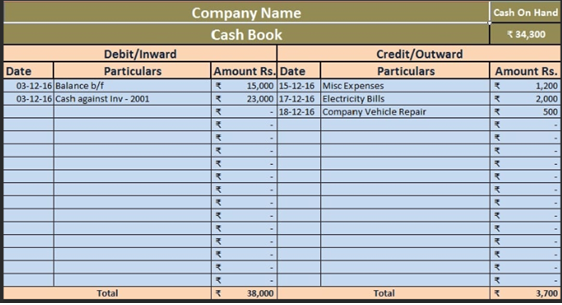
A cash book is a financial record used to document all cash receipts and cash payments made by a business. It includes transactions related to cash and bank accounts. Every time money is received or paid, the transaction is entered in the cash book.
Unlike other accounting books, the cash book directly records cash transactions without needing to be posted into a separate ledger account. At the end of a specific period, the balance of the cash book shows the amount of cash available with the business.
Importance of a Cash Book
A cash book plays a vital role in financial management. It helps businesses maintain organized and accurate financial records. Below are some key reasons why a cash book is important:
1. Tracks Cash Transactions
The cash book records all cash inflows and outflows, helping businesses monitor their cash position at any time.
2. Prevents Fraud and Errors
Maintaining a proper record reduces the chances of financial mistakes and unauthorized transactions.
3. Helps in Financial Planning
By reviewing the cash book, business owners can analyze spending patterns and make better financial decisions.
4. Simplifies Accounting
Since it works as both a journal and a ledger, it reduces the complexity of accounting records.
Basic Structure of a Cash Book
The cash book is usually divided into two sides:
-
Debit side (Receipts) – records all cash received.
-
Credit side (Payments) – records all cash paid.
Each side contains several columns to record transaction details.
Simple Cash Book Format
The simple cash book is the most basic form and is used by small businesses that deal only with cash transactions.
Format of Simple Cash Book
| Date | Particulars | Receipt (Debit) | Date | Particulars | Payment (Credit) |
|---|---|---|---|---|---|
Explanation of Columns
Date:
Shows the date when the transaction occurred.
Particulars:
Describes the person or account involved in the transaction.
Receipt (Debit):
Records the amount of cash received.
Payment (Credit):
Records the amount of cash paid.
Example
| Date | Particulars | Receipt | Date | Particulars | Payment |
|---|---|---|---|---|---|
| 1 Jan | Capital | 50,000 | 2 Jan | Furniture | 10,000 |
| 3 Jan | Sales | 5,000 | 4 Jan | Rent | 2,000 |
At the end of the period, the balance is calculated to determine the remaining cash.
Double Column Cash Book Format
A double column cash book contains two money columns on each side:
-
Cash column
-
Bank column
This format is used when businesses handle both cash and bank transactions.
Format of Double Column Cash Book
| Date | Particulars | Cash | Bank | Date | Particulars | Cash | Bank |
|---|
Key Features
-
Records transactions involving both cash and bank accounts.
-
Includes bank deposits and withdrawals.
-
Helps reconcile bank balances easily.
Example
| Date | Particulars | Cash | Bank | Date | Particulars | Cash | Bank |
|---|---|---|---|---|---|---|---|
| 1 Jan | Capital | 20,000 | 50,000 | 2 Jan | Rent | 5,000 | – |
| 3 Jan | Sales | 3,000 | – | 4 Jan | Supplier | – | 8,000 |
This format provides a clearer picture of both cash and bank balances.
Triple Column Cash Book Format
A triple column cash book is a more advanced version that includes:
-
Cash column
-
Bank column
-
Discount column
The discount column records discount allowed and discount received.
Format of Triple Column Cash Book
| Date | Particulars | Discount | Cash | Bank | Date | Particulars | Discount | Cash | Bank |
|---|
Explanation of Columns
Discount Column:
Records discounts offered to customers or received from suppliers.
Cash Column:
Records cash transactions.
Bank Column:
Records transactions through bank accounts.
Example
| Date | Particulars | Discount | Cash | Bank | Date | Particulars | Discount | Cash | Bank |
|---|---|---|---|---|---|---|---|---|---|
| 1 Jan | Ram | 100 | 5,000 | – | 2 Jan | Supplier | 50 | 3,000 | – |
The triple column format is commonly used by medium and large businesses.
Petty Cash Book
In addition to the main cash book, many businesses maintain a petty cash book for small daily expenses such as:
-
Office supplies
-
Travel expenses
-
Postage
-
Tea and refreshments
This helps reduce the number of small entries in the main cash book.
Format of Petty Cash Book
| Date | Particulars | Voucher No | Total Amount | Stationery | Travel | Miscellaneous |
|---|
Petty cash is usually maintained using the imprest system, where a fixed amount is given to the petty cashier.
Difference Between Cash Book and Cash Account
Many beginners confuse the cash book with the cash account, but they are slightly different.
| Feature | Cash Book | Cash Account |
|---|---|---|
| Recording | Records cash transactions first | Posted from journal |
| Type | Journal + Ledger | Ledger only |
| Purpose | Immediate recording | Final classification |
Advantages of Using a Cash Book
1. Accurate Financial Records
Maintains a clear and organized record of all cash transactions.
2. Easy Monitoring of Cash Balance
Businesses can instantly know how much cash is available.
3. Saves Time
Combines journal and ledger functions in one place.
4. Improves Financial Control
Helps detect discrepancies and prevent misuse of funds.
5. Useful for Audits
Provides documented proof of financial transactions.
Tips for Maintaining a Cash Book
Maintaining a proper cash book requires discipline and accuracy. Here are some useful tips:
Record transactions daily
Avoid delaying entries, as it may lead to errors.
Keep supporting documents
Always maintain bills, receipts, and invoices.
Balance regularly
Calculate the cash balance at the end of each day or week.
Separate duties
In larger businesses, different people should handle cash and record entries.
Use accounting software
Modern tools can automate cash book entries and reduce manual mistakes.
Digital Cash Book in Modern Accounting
Today, many businesses use accounting software instead of traditional paper cash books. Programs like Tally, QuickBooks, and Zoho Books allow companies to maintain digital cash books automatically.
These tools offer several advantages:
-
Automatic transaction recording
-
Real-time balance updates
-
Bank reconciliation
-
Easy financial reporting
Digital accounting has made cash management faster and more accurate.
Conclusion
The cash book is one of the most fundamental tools in accounting. It helps businesses maintain a clear record of all cash receipts and payments while providing an accurate picture of their financial position.
There are different cash book formats, including the simple cash book, double column cash book, triple column cash book, and petty cash book. Each format serves a specific purpose depending on the size and complexity of the business.
By maintaining a well-organized cash book, businesses can track their finances effectively, prevent errors, and make informed financial decisions. Whether maintained manually or digitally through modern accounting software, the cash book remains an essential component of sound financial management.