


In the modern global economy, money can move across borders within seconds. While international investment is an important part of economic growth, there are situations where large amounts of money suddenly leave a country. This phenomenon is known as capital flight. Capital flight can create serious economic challenges for developing and developed nations alike. Understanding its causes, effects, and possible solutions is important for students, investors, policymakers, and business owners.
Table of Contents
ToggleWhat Is Capital Flight?
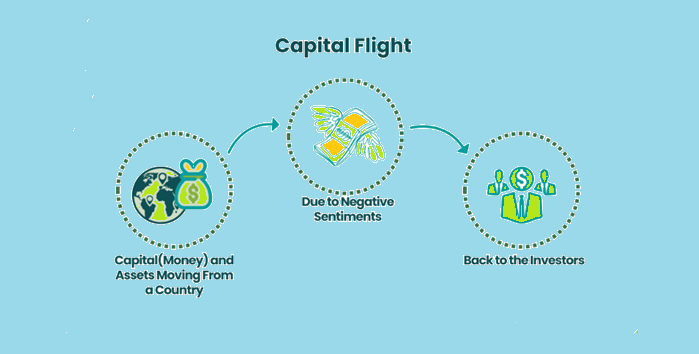
Capital flight refers to the rapid movement of financial assets or money out of a country. It usually happens when investors, businesses, or wealthy individuals lose confidence in the economy or political stability of their home country. To protect their wealth, they transfer money to countries considered safer or more profitable.
Capital flight can occur legally or illegally. Legal capital flight may involve investors moving money to foreign banks or purchasing overseas assets. Illegal capital flight often includes tax evasion, money laundering, or transferring undeclared funds abroad.
For example, if investors fear that a country’s currency will lose value or the government may impose strict financial controls, they may quickly move their money to foreign accounts. This sudden outflow can weaken the country’s financial system.
Major Causes of Capital Flight
Several economic and political factors can trigger capital flight. Some of the most common causes are discussed below.
1. Political Instability
Political uncertainty is one of the biggest reasons behind capital flight. Investors generally prefer stable governments and predictable policies. Political unrest, corruption, civil conflicts, or sudden regime changes can reduce investor confidence and encourage people to move their money abroad.
2. Economic Crisis
Economic problems such as high inflation, recession, rising unemployment, or large public debt can create fear among investors. When people expect the economy to worsen, they often transfer assets to countries with stronger economic conditions.
3. Currency Devaluation
If investors believe that the national currency will lose value, they may convert their wealth into foreign currencies like the US dollar or euro. Currency depreciation reduces purchasing power and investment returns, leading to capital outflows.
4. High Taxes and Strict Regulations
Excessive taxation or restrictive government policies may encourage businesses and wealthy individuals to relocate funds to countries with lower taxes and better financial environments. Some investors also seek countries known as “tax havens” to reduce their tax burden.
5. Fear of Asset Seizure
In some countries, investors fear that governments may nationalize industries, freeze bank accounts, or impose capital controls. To avoid potential losses, they transfer their assets overseas before restrictions are introduced.
6. Global Financial Opportunities
Sometimes capital flight occurs simply because better investment opportunities are available in other countries. Investors may move funds to markets with higher returns, stronger growth, or safer banking systems.
Types of Capital Flight
Capital flight can be categorized into different forms depending on the method used.
Legal Capital Flight
This includes legitimate foreign investments, overseas bank deposits, and international business expansion. Although legal, large-scale outflows can still negatively affect the domestic economy.
Illegal Capital Flight
Illegal capital flight involves activities such as tax evasion, corruption, smuggling money, or money laundering. These activities often violate national financial regulations and reduce government revenue.
Sudden Capital Flight
This occurs rapidly during financial crises or political emergencies. Investors panic and withdraw large amounts of money within a short period.
Gradual Capital Flight
In this case, money leaves the country slowly over time due to long-term economic concerns or unfavorable business conditions.
Effects of Capital Flight
Capital flight can have serious consequences for a country’s economy. The impact may be short-term or long-term depending on the scale of the outflow.
1. Currency Weakening
When investors sell the local currency to buy foreign currencies, demand for the domestic currency decreases. This can cause currency depreciation and increase import costs.
2. Reduced Investment
Capital flight reduces the amount of money available for local businesses, industries, and infrastructure projects. Lower investment can slow economic growth and job creation.
3. Banking System Pressure
Large withdrawals from banks can create financial instability. In severe cases, banks may face liquidity problems or collapse.
4. Lower Government Revenue
If businesses and wealthy individuals move money abroad, governments collect less tax revenue. This limits public spending on healthcare, education, and development projects.
5. Increased Inflation
Currency depreciation and reduced investor confidence may lead to higher inflation. Rising prices reduce consumer purchasing power and affect living standards.
6. Loss of Investor Confidence
Capital flight often sends negative signals to international markets. Foreign investors may become hesitant to invest in the affected country, further weakening the economy.
Examples of Capital Flight
Many countries have experienced capital flight at different times in history.
- During the Asian Financial Crisis of 1997, several Asian economies witnessed large capital outflows as investors feared economic collapse.
- In countries facing political instability or sanctions, wealthy individuals often transfer money to foreign banks to protect their assets.
- Economic crises in Latin America and parts of Africa have also led to significant capital flight over the years.
These examples show how quickly investor confidence can change and impact national economies.
How Governments Prevent Capital Flight
Governments and central banks use various measures to reduce capital flight and restore confidence.
Strengthening Economic Policies
Stable monetary and fiscal policies help build investor trust. Controlling inflation and maintaining sustainable debt levels are important steps.
Improving Political Stability
Transparent governance, reduced corruption, and strong institutions encourage investors to keep money within the country.
Encouraging Domestic Investment
Governments may provide tax incentives, business support, and infrastructure development to attract local and foreign investment.
Capital Controls
Some countries temporarily limit the amount of money that can leave the country during financial emergencies. While controversial, such controls can slow sudden outflows.
Building Foreign Exchange Reserves
Strong foreign currency reserves help central banks stabilize the national currency during periods of capital flight.
Conclusion
Capital flight is a major economic issue that can affect financial stability, investment, employment, and national growth. It usually occurs when investors lose confidence in a country’s political or economic environment. Factors such as inflation, political instability, high taxes, and currency depreciation often contribute to capital outflows.
Although some forms of capital movement are normal in a globalized economy, excessive capital flight can create serious problems for developing and developed countries alike. Governments can reduce the risk by promoting stable economic policies, transparent governance, and investor-friendly environments.
In today’s interconnected world, maintaining investor confidence is essential for long-term economic success. Understanding capital flight helps individuals and policymakers recognize the importance of financial stability and responsible economic management.